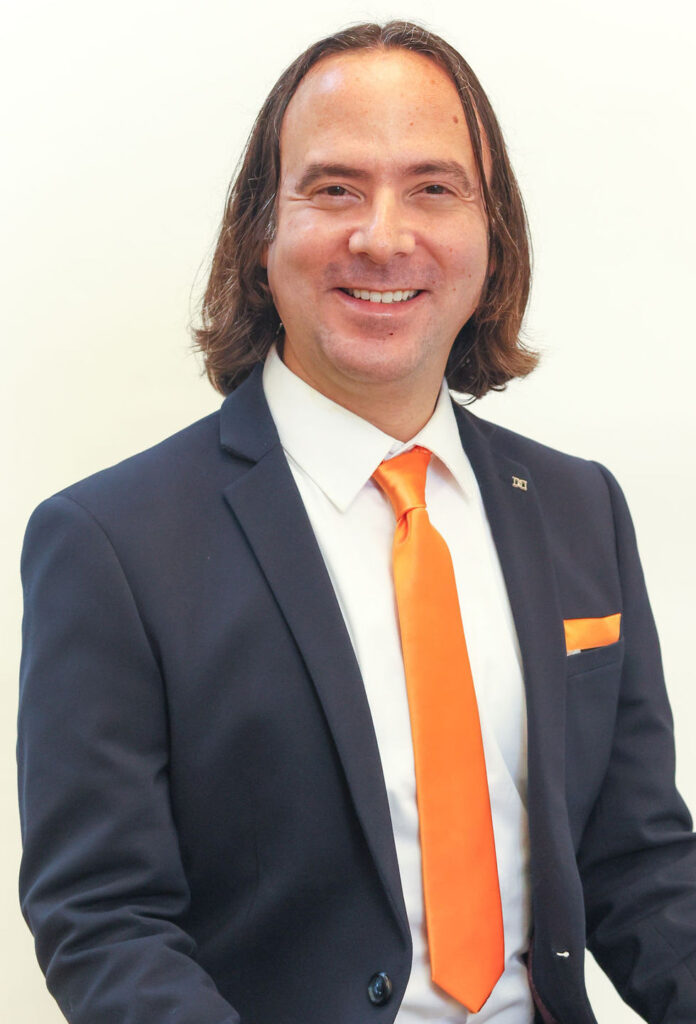
If you are reading this, then you must want to know more about me for some strange reason. If you want the nutshell version of my experiences in journalism and online marketing on three continents over the last ten years or so, then see the home page. This is probably more than you want to know.
I was born on September 27, 1980, in St. Louis, Missouri, in the United States. I grew up in Belleville, Illinois, a suburb of St. Louis of approximately 60,000 people. When I entered Belleville West High School (Class of 1998) as a freshman in a class of roughly 600, I loved politics and wanted to become president one day. I was elected Class Secretary after amusing the freshman gathered in the auditorium to hear the campaign speeches of all the candidates by opening my speech with a bombastic take on the line (by Marc Antony in a Shakespearean play): “Friends, Romans, freshman — lend me your ears!” At the end of my freshman year, I was elected sophomore Class President after getting the auditorium’s sound guy to play the theme music to “Jurassic Park” during my speech while I quoted Thomas Jefferson to an absurd degree (“The torch has been passed to a new generation of freshman!”) and received a standing ovation.
Style, unfortunately or not, often matters more than substance. More on that later.
It was during my freshman year that I tried various activities: the theater (I was Spintho in “Androcles and the Lion” and on the crew for “Joseph and the Amazing Technicolor Dreamcoat”), the tennis team (two years on junior varsity), and the Model United Nations. I quickly chose to focus on the latter as a result of my interest in politics and international affairs. The Model U.N., like its cousin the Model Congress, is a group of students who act like a session of the U.N. General Assembly or Security Council and during which each person represents one country and engages in speeches, backroom diplomacy, and resolution drafting in an attempt to solve global problems.
Belleville West went to regional and national competitions, and I was often a member of the GA or SC (one year as China comes to mind). I was better at the speech-making and using complicated parliamentary procedure than deal-making, so I used those two tactics to win Outstanding and Superior Delegate awards. One time, as China in the General Assembly, I killed a proposal that had massive support by announcing on the floor that my country would veto the peacekeeping resolution once it had moved to the Security Council. Another time, I killed something similar in a smaller U.N. committee by moving to table the issue at hand because it was a violation of arcane procedure to discuss something that was the purview of another committee.
Still, it was one experience over my four years in Model U.N. that taught me something that I would later take into journalism and marketing. When I was in the Security Council during a regional competition, I battled with another delegate — we were both “veto powers.” I gave logical, rational arguments for my side of the topic, but the other student — the annoying son of an annoying, local, state legislator — gave speeches that were vague, general, and full of amusing puns and jokes. The committee voted to make him Outstanding Delegate (first place) and me Superior Delegate (second place).
Style, unfortunately or not, often matters more than substance. More on that later. Oh, one other lesson: When you are on a Model U.N. trip to New York City for a national competition, do not ditch your teacher, take a taxi to Greenwich Village with friends, and get your ear pierced at a tattoo parlor at the age of seventeen. Your parents will not be happy.
My Entry into Journalism
During my sophomore year of high school, I gave the student newspaper a shot. Quickly, I realized that I loved journalism. I became assistant news editor, business manager, and then editorial-page editor over my senior year while continuing with the Model U.N. and taking my honors and AP classes. I won various awards for my news articles and op-ed columns at local competitions, though I do not remember specifics anymore.
What I do remember is how I used my platform as editorial-page editor to lambast the school board. Back in the 1990s, the Christian Coalition and the right-end of the political spectrum was gaining strength throughout the United States, and my part of southern Illinois was no exception. Voters elected enough people who were (unofficially) supported by the Christian Coalition to have a majority on the board (which oversaw Belleville West and the other public high-school, Belleville East). The board successfully removed an English textbook that included a fictional story mentioning witchcraft — imagine the debate over “Harry Potter,” but years earlier — and opposed any attempt to increase property taxes to generate more revenue for the district. So, as editorial-page editor, I railed against the board in my monthly columns. In retrospect, I respect the fact that I had never once received any pressure to “tone it down.” As a budding journalist, I rallied against any censorship, and I decried the attempts to block any sources of additional funding since, if I recall correctly, the textbooks we used were from the 1970s and the building was full of rust and asbestos.
Still, I was impatient with high-school journalism. I wanted something bigger. So, one afternoon after school, I drove to the downtown office of The Belleville News-Democrat, the major daily that covered southwestern Illinois, with a basic resume in hand. Since I was editorial-page editor at Belleville West’s school newspaper, I asked the secretary if I could speak to the editorial-page editor there. To my surprise, in retrospect, she came down to speak to a seventeen-year-old kid. After speaking for a few minutes, she took my resume, and I thanked her for her time.
Months later, I got a call in the newsroom of the school newspaper. The sports editor of the News-Democrat had received my resume from the editorial-page editor, and he invited me to interview for the position of agate clerk. Since I had been working in the evenings as a waiter at a local steakhouse for extra money, I went. This was my dream! And it was here that I learned the importance of doing the right thing in interviews: do not trumpet yourself too much — ask intelligent questions instead (as any journalist can do).
During the interview, I asked about their publication process. At my school newspaper, the reporter wrote the story, his section editor revised it, the copy editor proofread it, and then the editor-in-chief laid out the page. I asked the sports editor if something similar happens at a “real” newspaper like the News-Democrat. Later, he told me that he hired me, a seventeen-year-old kid still in high school, over dozens of journalism majors at local colleges because I had been intelligent enough to ask good questions. If you are currently looking for work in this tough economy, remember that.
However, my first journalism job did not work out — and, of course, I learned a valuable lesson in the process. You know the Scoreboard page in newspapers that lists (used to list?) all of the results and box scores from myriad sports and teams? My job, many nights a week, was to pull all of the information off of the AP wire, organize it, and then layout the page for the press room. I was fired after a few months.
You see, such a page has so many names of players that you cannot run spell-check because it would take hours to complete — you just have to “know” how everything is spelled. After the baseball strike when I was a kid in the early 1990s, I had lost interest in baseball until I moved to Boston for college in 1998 and got sucked into Red Sox Nation. So, I was not very interested in the St. Louis Cardinals in high school. But I had to type and layout the box score of each night’s game myself. Since I had barely followed the team, my typing had mistakenly spelled “Cardinals” as “Cardnials” in the box scores for months. Eventually, the newspaper got many, many complaints. And I was fired.
Substance, unfortunately or not, often matters more than style. More on that later.
When it came time to apply for college, I won a half-tuition scholarship to Boston University’s College of Communication as a result of my journalism experience (I think I had neglected to mention that I had been fired). Later, I even won a small grant from the local chapter of the Society of Professional Journalists. So, it was off to the big city on the East Coast — and to a college that, so they said, was the third-best one in the country for journalism.
But before I left, I wanted to spend the summer of 1998 doing something in journalism. I was growing increasingly interested in the Internet — something that would foreshadow my expertise in online marketing years later — so I found The American Reporter, the first online-only newspaper whose original claim to fame was breaking the news of the Oklahoma City bombing. Long story short, I e-mailed editor-in-chief Joe Shea, and he brought me on board. I freelanced from the summer before college through most of my days at BU. My favorite article — which I wrote for my feature-writing class during my junior year at BU and then submitted to The American Reporter — was on the effort to reverse the decline of Belleville, Illinois. Sure, the design of The American Reporter is not the most professional on the Internet, but many of the articles are of top-notch quality.
Substance, unfortunately or not, often matters more than style. More on that later.
My Nine Years in Boston and London
In the spring of 1999, I was taking Introduction to Communication 201, a freshman course that taught the basics of writing news articles, screenplays, memoirs, and other styles. The professor brought in a friend of his, the managing editor of The Beacon Hill Times — a weekly, neighborhood newspaper that covers the most upper-class area of the city. (Sen. John Kerry, also the 2004 Democratic presidential candidate, lives there.) After she spoke about her job, I asked her if there were any available internships. I became an intern in the fall of 1999 during my sophomore year. It was then that I had my first experience of hyper-local reporting: neighborhood association meetings, zoning issues, and — that ever-persistent problem in downtown Boston — rats. People always complained that there were so many rats even though Beacon Hill, among other neighborhoods, was originally built on landfill centuries ago. The problem will never go away.
Years later, when I was a staff reporter after college for another neighborhood weekly that competed with The Beacon Hill Times, the editor told me that he was impressed with the Beacon Hill Times — they ran a successful, profitable newspaper in an area with no real news, he said! The concerns of the affluent, I guess.
Style, unfortunately or not, often matters more than substance. More on that later.
At the same time that I was interning for The Beacon Hill Times early in my sophomore year, I was also a weekly city columnist for The Daily Free Press, BU’s independent student newspaper with a circulation of the university’s 30,000 students. I named my column “In the World” and discussed serious issues involving city, state, and national politics. To be honest, it was not that popular. To quote the managing editor at the time, my writings were “boring.” The most-popular columnists were those who discussed dating and sex or who told humorous anecdotes about the everyday lives of BU students. It was then that I learned that whether one is a journalist or, later, a marketer, one needs to play to the target audience or demographic.
Style, unfortunately or not, often matters more than substance. More on that later.
At the end of the fall semester, I successfully applied to become the next editorial-page editor of the DFP over the spring semester of my sophomore year in 2000. Every evening after classes (Sundays through Thursdays), I spent hours in the newsroom writing our editorials on campus, local, and national issues, editing the writings of the columnists, and then laying out the editorial and op-ed pages. I, like every other editor, did not have much of a life at the time — but, like the budding journalists we were, we loved every minute. And the fact the the newspaper would buy tons of beer every Thursday night that we would drink while creating Friday’s paper. (I would not be surprised if, in retrospect, the Friday edition tended to have more typos. But we worked hard and deserved to have a little fun.)
That spring semester, I became active in the newly-formed BU chapter of the Society of Professional Journalists (SPJ) and was elected treasurer. As a club activity, we took a tour of The Boston Globe with our adviser, Prof. Christopher Daly, who was then (I think) the Boston bureau-chief for The Washington Post. Sensing an opportunity, I put on a suit and had a resume and clips in hand. In the lobby of The Boston Globe, then-city editor Joe (Joseph) Williams came down to speak with us. As it had happened, there was a major plane crash that day, and he said that he was the guy in the newsroom who hurriedly works with a “black cloud” following him all of the time. I had always appreciated dark humor — especially since I now live in Israel.
After Williams’ talk, I approached him and asked if I could speak to him for a second. I gave him what I now realize was an “elevator pitch” and asked if the Globe needed a college student for any job, no matter how small. He said to come to the newsroom to speak with him when our group toured the newsroom. A short time later upstairs, he introduced me to the woman who was the administrative editor for the Metro Desk (now called the City & Region Desk, I think) and who managed the college editorial assistants. I gave her the same pitch, and a few days later, she called me to offer me a full-time job. The moral: Always recognize and go after every opportunity, no matter how remote it may seem.
From July to December 2000 (the summer before and the fall semester of my junior year), I was an editorial assistant for the Metro Desk of The Boston Globe. I lived in the so-called “student ghetto” of the Allston-Brighton neighborhood with two friends at the age of nineteen that summer before I returned to my dormitory that fall. From 7:30 a.m. to 3:30 p.m. every Monday through Friday, I ran errands from the home office to the bureaus at City Hall, the State House, and Suffolk County Courthouse (in a company car!); gathered information and quotes for reporters; ordered office supplies and delivered them around the building; and tried to develop friendships with the reporters and editors.
One thing that I found is that you will learn more in thirty minutes with a mentor than three hours in a classroom.
Of course, my main goal was to get at least one article in The Boston Globe. I got three over the six months that I worked full-time and when I freelanced during my senior year and after graduation (I chose night classes during my fall-semester load since I was working full-time during the fall semester of my junior year:
- A “day in the life” profile of Boston City Councilor Mike Ross (whom I would cover each week in a later staff position) — part one and part two
- A sad story on the New England Aquarium deciding to end the sea-lion show
- An art exhibit on the infamous Big Dig construction project
My time at the Globe also included my first attempt at online publishing (at the age of nineteen). I created the now-defunct website The World Internet Times (captured here in the Internet archives as well):
The archives, of course, includes only the text and not other factor into account like the colors and graphics. My goal was to present a view of the world as if an alien would be viewing it from orbit. Instead of writing and publishing for the people of a specific city or country, I would do it from a global context and focus more on big-picture, geopolitical analysis rather than straight news. I taught myself Dreamweaver (at a basic level), and signed up to have affiliate banner ads as the advertising. I used free, syndicated articles, content that a friend and I wrote ourselves, and I recruited other journalism college students in various countries to write for free as interns. I gave up the project after several months because it never went anywhere.
After my six-month editorial-assistant position at the Globe ended, I obtained another at The Patriot Ledger, a daily that covered the South Shore of Massachusetts, from January to May 2001 while taking my classes during the week. I worked eight hours a day on Friday evenings and Saturdays during the day, writing obituaries, features, and news stories. These are the ones that I remember the most:
- A feature I wrote on a South Shore blind-baseball league (part one and part two)
- Late on a Friday night, I heard on the police scanner that there was a violent incident at the mall in Dedham, Massachusetts. I took a company car there and got the on-the-scene facts while another reporter got the details from the police. I told my editor everything that I had learned over the phone
Another thing I remember is how my bosses looked out for their young assistants. When I was on the way back to the Patriot Ledger office after the shooting in Dedham, I got lost because I was unfamiliar with the roads in that part of Massachusetts. I think I arrived at the office at something like two o’clock in the morning. Still, the night editor — a middle-aged guy with a family — volunteered to drive me back to BU in Boston because I had no other way to get home since the public transportation was closed. I have always been grateful.
When I was a kid growing up, I became quite the Anglophile as a result of watching a lot of public television (PBS) — “Doctor Who,” “Monty Python,” and “Red Dwarf,” among other shows. So, as the spring semester of my junior year and my position at the Patriot Ledger came to a close, I decided to take BU’s study-abroad program to live in London, England, that summer and obtain a journalism internship in that country.
From May to August 2001, I lived and worked in London. During the day, I took journalism classes from British professors and worked for TNT magazine, and at night, I worked (under the table!) as a bartender at a South Kensington pub at the age of twenty. Most of my time at TNT was spent proofreading articles and writing blurbs, but these were two pieces that I remember the most (reviews of London pubs for the Australian and New Zealand expatriates in London who the magazine targeted).
When I returned to BU in the fall of 2001 to start my senior year — the terrorist attacks of September 11 happened on the same day that was driving a U-Haul throughout the city and moving back into my dormitory — I continued to freelance for the Globe until I graduated early in January 2002 as a result of my extra journalism credits from my numerous internships and my summer study-abroad in London. I could not find a full-time job in journalism since the post-2000 economic downturn had already begun to accelerate and the Internet had begun its devastation of the print media.
So, I took a job in February 2002 as a staff assistant at The Beacon Hill Institute, an economic think-tank at Suffolk University in Boston. Since I had never taken any economics classes at BU, this job was my first experience with economics. And my interest was completely piqued — and it would eventually lead me to complete most of Suffolk University’s Executive M.B.A. program years later and then later use the economics knowledge in my later writings on economics and my current marketing career.
My Career in Boston Journalism
I left BHI seven months later to become a staff reporter for The Boston Courant (no website), a weekly neighborhood newspaper that covers the Back Bay, Beacon Hill, Fenway, and South End. For two years, I wrote most about the Boston Redevelopment Authority (BRA) and urban development. (I also covered local crime, the city council, and other issues.) My two favorite articles were:
- An investigative article on the Boston University Task Force – A neighborhood committee of residents and community organizations that would review BU’s proposed developments and decide whether to recommend that the BRA and city approve them. I found that many members were employees of BU and/or represented neighborhood groups that, for all intents and purposes, did not exist
- I learned of a major disaster involving the construction of BU’s Hotel Commonwealth in Kenmore Square. The BRA and city had approved a certain design and appearance, but when the new building was unveiled, it looked nothing like what the city had approved — part one and part two
In 2004, I became the first professional journalist to be the editor-in-chief of Spare Change News, a Boston-area, non-profit newspaper that covers so-called social-justice issues and also helps homeless people by employing them to distribute the newspaper. The publication gives 10 papers free to each new vendor, and thereafter SCN sells each copy for a quarter and the vendors sell them to people on the street for a dollar, garnering them a seventy-five cent profit on each issue sold.